


Each year in March, we mark International Women’s Day and reflect on the progress made towards gender equality. March is also Women’s History Month, and many go on to campaign for equity throughout the year, year after year.
Over the years, we’ve reached great milestones - giving women the right to vote, the Sex Discrimination Act, the Equal Pay Act - but they’re all too few, and frustratingly far between.
And when you turn the spotlight to equality in the investment profession, the picture is especially maddening. Here’s why:
In the UK, women hold the key to wealth. According to the Office of National Statistics, women on average live four years longer than men, which means they’re likely to benefit from inherited wealth. You can see this in the chart taken from a 2025 Pru survey below.
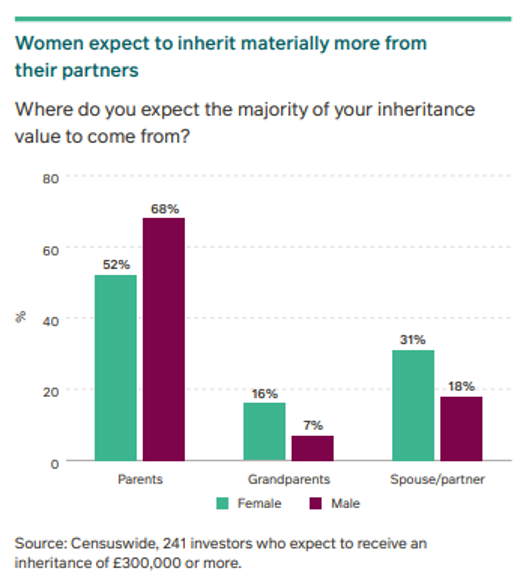
Source: M&G – Untapped Potential of Women's Wealth
What’s more, forecasts from the Centre for Economics and Business Research suggested that women were likely to own 60% of UK wealth by the end of 2025 . More women are generating their own wealth through career progression, despite taking career breaks. And that means women are likely to pass on wealth to the younger generation. All in all, they have a greater need for advice – yet are underrepresented by advisers.
A survey by Unbiased found that 69% of women have never consulted a financial adviser , yet they are at the heart of the great wealth transfer. So how do we get more women interested in financial planning?
The problem is that women face multiple barriers when seeking financial advice. Many lack confidence due to the gender pay gap. Others fear being judged for past financial mistakes, or struggle with the language and don’t want to feel embarrassed. To break down these barriers, we need to provide the right guidance and education.
Seeking advice is one thing, and investing is another.
Women’s attitudes to investing also differ from men’s and can have a profound impact on their long-term wealth. Women are historically known to be good at saving (especially in cash) and are generally considered more risk-averse, prioritising financial security over the risk of losing money. In reality, they are not necessarily risk-averse – they are more risk-aware and want to understand the risks they’re taking.
This really boils down to behavioural differences between men and women. The way men and women process and understand risk can lead to different decisions. Research shows that women prefer consistency and long-term security over short-term gains. Women are also more likely to choose diversified portfolios with steady, moderate gains and to stay invested during periods of market volatility. If you ask me, this is a pretty rational way to invest – and making more women aware that this is normal and sensible could in itself help boost confidence.
While men have generally led the way when it comes to investing , a study by Wells Fargo highlights that women demonstrate certain strengths in relation to investing. These include a willingness to learn from investment professionals and use that information to make more balanced and informed decisions. They also tend to take a more disciplined approach and invest in less speculative stocks. Women’s awareness of risk means they are better rewarded for the risks they do take compared to men, so on a risk-adjusted basis they can achieve superior returns.
We just need to get past the biases and lack of confidence.
This year’s International Women’s Day theme ‘Give to Gain’ is a reminder that encouraging women to seek financial advice will help them future-proof their wealth with better investment decisions.
Taking a holistic approach to advice – one that is comprehensive, informed and empathetic – can lead to better outcomes. So what are we waiting for?
This is a huge opportunity to tap into an underrepresented and growing market. The current glacial pace of progress is not good enough. We need to move forward – and faster.
This article is for financial professionals only. Any information contained within is of a general nature and should not be construed as a form of personal recommendation or financial advice. Nor is the information to be considered an offer or solicitation to deal in any financial instrument or to engage in any investment service or activity. Parmenion accepts no duty of care or liability for loss arising from any person acting, or refraining from acting, as a result of any information contained within this article. All investment carries risk. The value of investments, and the income from them, can go down as well as up and investors may get back less than they put in. Past performance is not a reliable indicator of future returns.

